
The Whistle That Never Sounded for Carbon: FIFA’s Promises and the Price of a Larger World Cup
From Qatar’s carbon-neutral promise to football’s biggest World Cup, a reflection on growth, stewardship, and the cost of expansion.
There are moments in sport that command the attention of almost the entire world. For a few weeks every four years, differences of language, politics and geography give way to a shared conversation. Children imagine themselves in the final, families gather around television screens and entire nations pause for ninety minutes. Few sporting events possess the cultural power of the FIFA World Cup. Because of that influence, the words spoken before a tournament matter almost as much as the football itself.
Two Stories Behind Every Major Event
Having spent more than three decades in international sport, I have learned that every major event tells two stories. One unfolds on the field through competition, courage and unforgettable moments. The other unfolds behind the scenes through planning, logistics, infrastructure, transport, finance and governance. Spectators remember the goals. Organizers remember the decisions. Both stories matter because every operational decision shapes the event long before the opening whistle.
From Qatar’s Carbon-Neutral Claim
Before Qatar 2022, FIFA presented the tournament as the first carbon-neutral World Cup. However, independent researchers questioned the emissions accounting and the assumptions behind the offsetting program. Later, regulators in Switzerland and a court in Germany concluded that FIFA had not substantiated the advertising claim. Consequently, the debate shifted away from slogans and towards evidence. Trust is earned through demonstrable action rather than ambitious declarations.
Spain’s Triumph and Football’s Growth
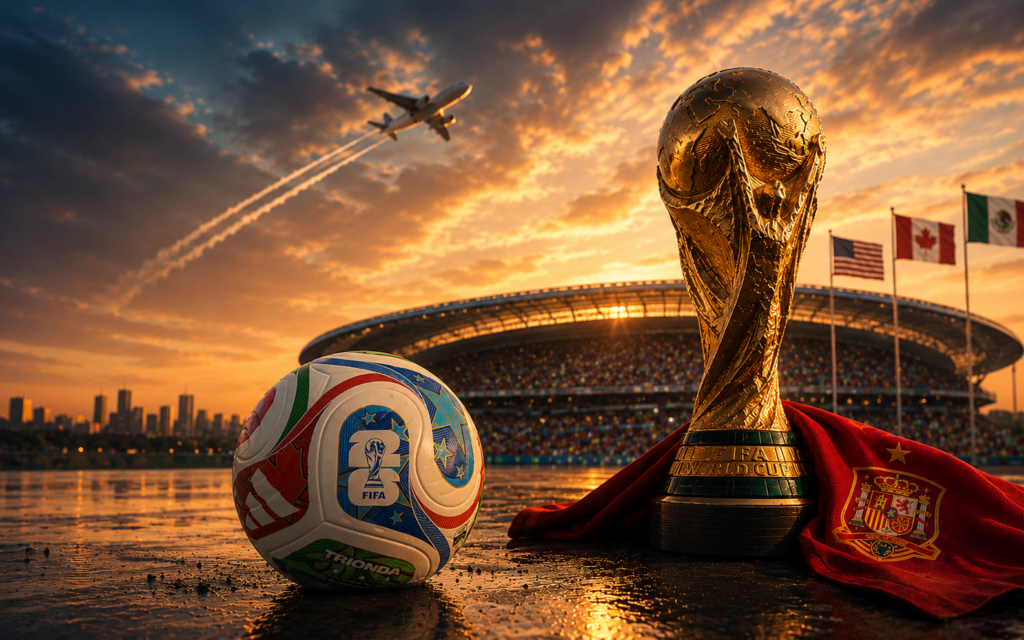
Spain deservedly became world champions in 2026 after an outstanding tournament. Nevertheless, the competition also became the largest FIFA World Cup ever staged. Forty-eight teams, one hundred and four matches and three host nations expanded football’s reach while also increasing travel, logistics and operational complexity. Therefore, the environmental footprint inevitably became larger as well.
Why I Created Pre-Zero Sports Talk
When I launched Pre-Zero Sports Talk in 2022, I intentionally chose the name ‘Pre-Zero’ rather than ‘Net Zero’. The intention was never to reject environmental responsibility. Instead, I wanted to explore what happens before long-term pledges become reality. Since the Paris Agreement, governments, sporting organizations and businesses have announced ambitious targets. My question was different: what practical decisions are being taken today? Over more than one hundred conversations with scientists, sports leaders, entrepreneurs, conservationists, regenerative farmers, engineers and innovators, one lesson has remained consistent. Genuine progress comes from today’s decisions, not tomorrow’s headlines.
Operational Improvements and Structural Expansion
FIFA deserves recognition for introducing sustainability strategies, encouraging responsible procurement, improving public transport and maximizing existing infrastructure. Moreover, these initiatives demonstrate that meaningful operational improvements are possible. However, operational efficiency cannot fully offset continual structural expansion. More teams create more matches. More matches require more travel. Consequently, every expansion carries additional environmental costs.
The Governance Question
This ultimately becomes a governance question rather than a technical one. Therefore, governing bodies should be willing to ask difficult questions about tournament size, host geography, transport and infrastructure. Otherwise, sustainability risks becoming something applied after growth instead of something shaping growth from the beginning.
Conclusion
Spain’s victory will rightly be remembered. Yet the tournament also reminds us that credibility is measured by evidence, not aspiration. Major sporting events will never eliminate every emission. However, they can become more honest, more transparent and more thoughtful in the choices made before the first ticket is sold. Stewardship begins before promises. It begins with decisions.
Editor’s Note
This article expands on a personal essay originally published on my Substack. While this version focuses on sports governance, sustainability, and leadership, the Substack edition offers a more reflective perspective on the same subject.