

What does it really take to recover from a sports injury? More importantly, why doesn’t being pain-free mean an athlete is ready to compete?
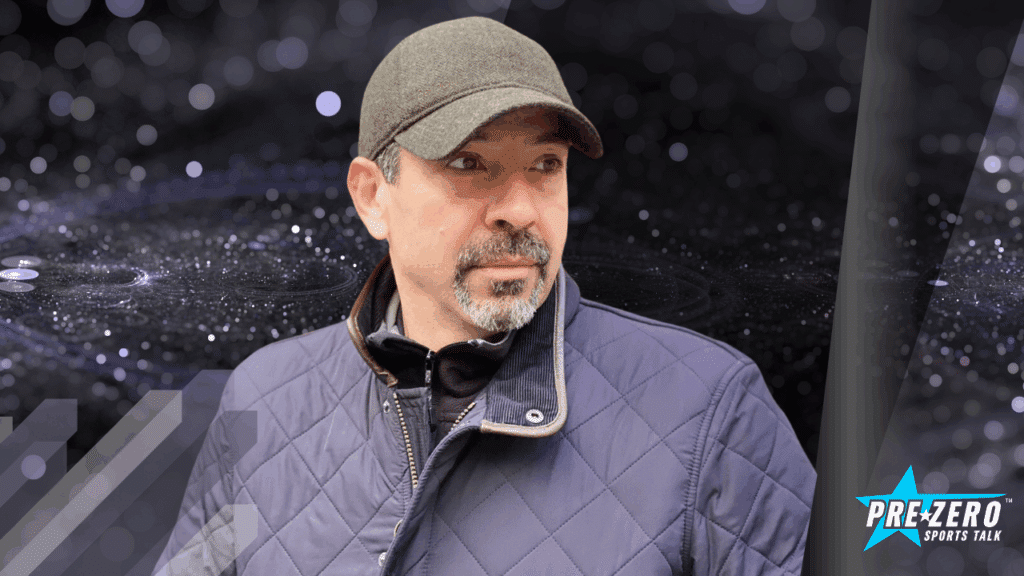
In Episode #108 of Pre-Zero Sports Talk, Sid Bensalah speaks with Peter Dionisopoulos, a Doctor of Physical Therapy, performance rehabilitation specialist, and founder of Dynamic Performance and Rehab.
Together, they explore sports injury recovery, performance rehab, movement assessment, return-to-play, and long-term athlete development. However, this conversation goes beyond physical therapy. It is also about understanding the individual behind the injury.
From Injury to Performance
Peter’s approach connects rehabilitation with the real physical demands of sport. So recovery doesn’t stop when the pain disappears.
Instead, an athlete must rebuild strength, movement capacity, confidence, and workload tolerance. Moreover, those qualities must hold up under speed, fatigue, and competition.
Peter explains why rehabilitation should prepare athletes for what their sport actually demands. As a result, return-to-play decisions require more than a pain-free test in a controlled environment.
Why Rehab Patients Can Stay Stuck
Why do some people remain in pain after months of physical therapy or even surgery?
Peter explains how rehabilitation can focus on symptoms rather than the full movement problem. For example, pain may appear in the knee while other movement limitations contribute to the issue.
Moreover, standardized protocols do not always reflect an individual athlete’s needs. Time restrictions and insurance models can also influence care.
Therefore, Peter believes assessment and rehabilitation must remain individualized.
A 35-Year Back Pain Story
One of the episode’s most powerful case studies involves an active man in his late 70s. He had lived with serious back pain for more than 35 years.
However, Peter did not examine only the painful area. Instead, he assessed how the man’s entire body moved.
The assessment revealed limitations involving other areas, including the hip, knee, and shoulder. Peter then developed a progressive plan around those findings.
Over time, the man’s movement improved. Most importantly, he eventually reported that the longstanding back pain had disappeared.
Movement Bias and Individual Assessment
Peter also explains the concept of “movement bias.”
Simply put, people develop preferred strategies for standing and moving. However, those strategies can influence how forces travel through the body.
Therefore, Peter begins by learning the person’s history and goals. Next, he observes standing position and gross movement. He also uses photographs, side-to-side comparisons, and table-based assessments.
Importantly, the assessment does not end after the first appointment. Instead, Peter reassesses throughout rehabilitation.
ACL Rehabilitation and Returning to Sport
The conversation also examines a collegiate soccer player returning from an ACL injury.
Initially, she performed well during controlled rehabilitation. However, knee symptoms returned when sprint volume, jumping, landing, and fatigue increased.
Therefore, Peter adjusted the workload rather than simply stopping the process. He also examined how her movement changed as fatigue increased.
Gradually, she progressed into higher-volume sprinting, directional work, and demanding conditioning.
The lesson is simple: healed tissue still needs preparation for sport.
Why Pain-Free Does Not Mean Game-Ready
Being pain-free is an important milestone. However, it is not necessarily the finish line.
An athlete may feel comfortable walking or completing basic exercises. Yet competition demands much more.
For example, athletes may need to sprint repeatedly, jump, land, rotate, absorb force, and change direction. Moreover, they must do so while fatigued.
Therefore, return to play should reflect the demands of the actual sport.
Protecting an Athlete’s “Superpowers”
Not every asymmetry needs correction.
In fact, elite athletes often develop unique physical adaptations because of their sport. Peter calls some of these adaptations an athlete’s “superpowers.”
For example, a baseball pitcher may require unusual shoulder mobility to throw at elite velocity. However, forcing that athlete toward an average movement profile could reduce performance.
Therefore, the challenge is knowing what to correct and what to protect.
Ultimately, rehabilitation should support health without removing the qualities that make an athlete exceptional.
KPIs, Load Management and Athlete Performance
Peter also explains how key performance indicators, or KPIs, can guide rehabilitation and training.
Depending on the athlete, these may include force output, time to peak force, movement range, symptoms, workload, fatigue, and sport-specific performance.
However, collecting more data does not automatically produce better decisions.
Instead, practitioners need to identify the measurements that matter for that athlete. Then, they can monitor those indicators over time.
As a result, coaches and rehabilitation professionals can adjust training before a manageable problem becomes a larger setback.
When Coaches and Therapists Disagree
Return-to-play decisions can become complicated.
For example, the athlete may want to compete. Meanwhile, the coach wants the strongest possible lineup. At the same time, the therapist may believe the athlete needs more recovery.
Therefore, communication becomes essential.
Peter discusses how therapists, strength coaches, sport coaches, athletes, medical staff, and families can work together. Ultimately, everyone should understand the risks, goals, and performance requirements.
Technology and the Future of Sports Medicine
Technology continues to reshape sports rehabilitation.
Wearables, force measurement systems, recovery tools, and artificial intelligence can provide useful information. However, Peter believes technology should support professional judgment, not replace it.
Moreover, fundamentals still matter.
A sophisticated device cannot replace good assessment, clear communication, progressive loading, or understanding the person standing in front of you.
Therefore, the future of sports medicine may depend on combining better technology with better human decision-making.
What Does Success Really Mean?
Near the end of the conversation, Sid asks Peter a simple question:
“What does success mean to you?”
Peter’s answer reveals something deeper than sports performance or professional achievement:
“I want to be a good father and a husband. And being able to live a life of purpose. I don’t care about having anything fancy. I just want to help people and be with my family.”
Ultimately, that answer captures much of the person behind the profession.
For Peter, success is not simply about helping someone move better or return to competition. Instead, it comes back to family, service, purpose, and helping other people.
Key Takeaways
- Being pain-free does not automatically mean an athlete is ready to compete.
- Sports injury recovery should reflect the real demands of the athlete’s sport.
- Pain location may not reveal the full movement problem.
- Individual assessment matters more than one-size-fits-all rehabilitation.
- Fatigue can expose movement problems that remain hidden during controlled exercises.
- ACL rehabilitation should progress toward sprinting, cutting, landing, and sport-specific workloads.
- Not every athletic asymmetry needs correction.
- KPIs can help guide load management and return-to-play decisions.
- Rehabilitation and strength training should form a continuous progression.
- Communication between athletes, therapists, coaches, and support teams is essential.
- Technology can support sports medicine, but it cannot replace human judgment.
- Ultimately, performance matters. However, purpose, service, and family matter too.
Episode Chapters
00:00 — FIFA World Cup, fatigue and physical demands
01:56 — A physical therapist’s view of soccer demands
07:26 — Peter’s journey into performance rehabilitation
09:49 — Why rehab patients stay stuck
13:03 — Individualized rehabilitation plans and KPIs
15:51 — System limitations, insurance and rehabilitation
19:07 — The 35-year back pain case
22:37 — Looking beyond the location of pain
23:59 — Peter’s first-session assessment process
32:27 — Posture, movement and real control
35:51 — ACL rehabilitation and returning to sprinting
39:39 — Athletic adaptations and “superpowers”
42:20 — What to protect versus what to correct
49:53 — KPIs, workload and ongoing reassessment
52:11 — Peak performance versus longevity
56:15 — Why pain-free does not mean ready to play
01:01:25 — Rehabilitation as a strength foundation
01:03:04 — Conflicting return-to-play priorities
01:07:34 — Communication between therapist, coach and athlete
01:10:21 — Technology and the future of sports medicine
01:14:15 — Lightning round and Peter’s perspective on success
About Peter Dionisopoulos
Peter Dionisopoulos is a Doctor of Physical Therapy and founder of Dynamic Performance and Rehab. His approach connects physical therapy, movement assessment, strength, and performance.
Peter works with athletes, active adults, and individuals seeking to move beyond pain relief. He also focuses on helping people build the capacity required for sport, training, and everyday life.
Watch or Listen to Episode #108
Watch or listen to the full conversation with Peter Dionisopoulos on Pre-Zero Sports Talk.
🎧 Listen now and walk away with insight, not just opinion. Enjoyed this episode? Subscribe, leave a review, and share it with someone who values leadership, purpose, or creative risk.
🎧 Available on Spotify, Apple Podcasts, YouTube, Amazon Music, iHeartRadio, Deezer, TuneIn, Podchaser, & more.
📲 Watch the full interview on YouTube + Spotify